 RAL Picker
Character of RAL 5005
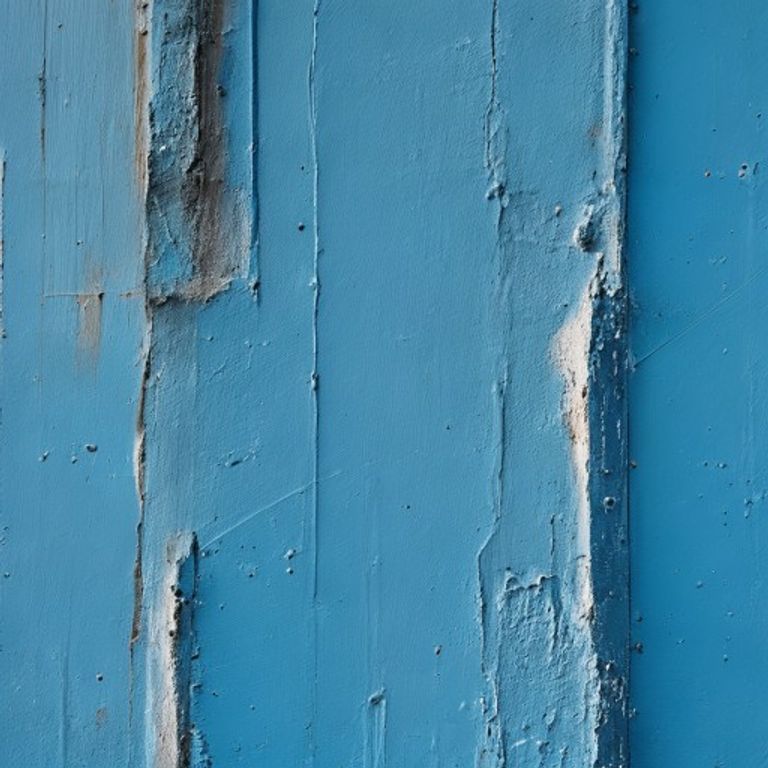
RAL 5005, Signal blue, is not a passive color. It is a hard, dry blue with no trace of warmth. The hex code #154889 translates into a pigment that sits squarely in the mid-blue range, but with a deliberate flattening of chroma. The undertone is pure cyan, but it is heavily muted by a dusting of grey. This is not the saturated, electric blue of a tropical ocean; it is the blue of a cold, overcast sky at noon. When you hold a RAL 5005 chip next to a true primary blue, the difference is jarring—Signal blue is noticeably less luminous and carries a slight, gritty mineral quality. The surface perception is matte by default; even in a gloss finish, the color refuses to reflect warmth. It feels solid, authoritative, and slightly heavy. The mood it projects is one of controlled efficiency—there is no sentimentality, no invitation to linger. It is a blue that says "proceed," not "relax."
Where you see RAL 5005
This color is the workhorse of industrial visual identity. You will find RAL 5005 most consistently on heavy machinery housings, particularly on CNC equipment, hydraulic presses, and industrial conveyor systems. In transportation, it is a standard color for the chassis of municipal emergency vehicles in several European countries—fire engines in Germany and the Netherlands have used Signal blue for decades, differentiating from the red used elsewhere. It also appears on airport ground-support equipment: baggage tugs, fuel trucks, and stair vehicles are often painted in RAL 5005 to ensure high visibility without the glare of a lighter color. In signage, it is common on directional panels for industrial parks and logistics centers, where it competes with green for wayfinding. A less obvious but reliable application is in electrical distribution—the enclosures of high-voltage switchgear and control cabinets frequently arrive from the factory in RAL 5005. This is not a color chosen for aesthetics; it is chosen for instant recognition at distance and in peripheral vision.
Pairs well with
RAL 5005 demands companions that can match its density without competing. RAL 1018 (Zinc yellow) is the strongest partner—the high-chroma, slightly greenish yellow cuts through the grey-blue like a warning stripe, creating the classic industrial contrast used on safety barriers and crane hooks. RAL 9006 (White aluminium) provides a metallic, cool silver that echoes the mineral undertone of Signal blue without introducing warmth; this pairing is common on laboratory equipment. For a darker, grounded combination, RAL 7012 (Basalt grey) works because it shares the same muted saturation level—the two colors sit next to each other without one dominating, ideal for two-tone machine panels. Finally, RAL 3000 (Flame red) creates a high-stakes pairing seen on emergency controls and fire-fighting apparatus; the red must be used sparingly, as an accent, because both colors are equally aggressive in their refusal to recede. Avoid pairing RAL 5005 with any pastel or off-white—the softness will make Signal blue look muddy and cheap.
Common confusion
The two most frequently confused colors are RAL 5010 (Gentian blue) and RAL 5017 (Traffic blue). RAL 5010 is darker and noticeably more purple—hold the chips side by side, and you will see that Gentian blue has a violet shift in its shadow areas, while Signal blue stays neutral. RAL 5017 is the real trap: it is lighter, cleaner, and significantly more saturated. On a fan deck, the difference becomes obvious when you look at the edge where the color meets the white card—Traffic blue will have a sharp, clean boundary, while Signal blue will appear to bleed slightly into grey. In a photograph, the easiest test is to compare the blue against a known white object in the same image: if the blue looks almost black in the shadows, it is likely RAL 5010. If it looks electric and almost glowing, it is RAL 5017. RAL 5005 sits stubbornly in the middle—neither dark nor bright, just flat and purposeful.
Picking RAL 5005 from a photo
Use RAL Picker on iOS or Android to sample a surface in a camera view or photo and compare the nearest RAL Classic colors, including RAL 5005. Camera white balance, lighting, shadows and reflections affect the result. Use even, neutral lighting and treat the match as an approximation. Before ordering paint or specifying a finish, confirm the color with a physical RAL swatch.