 RAL Picker
Character of RAL 5015
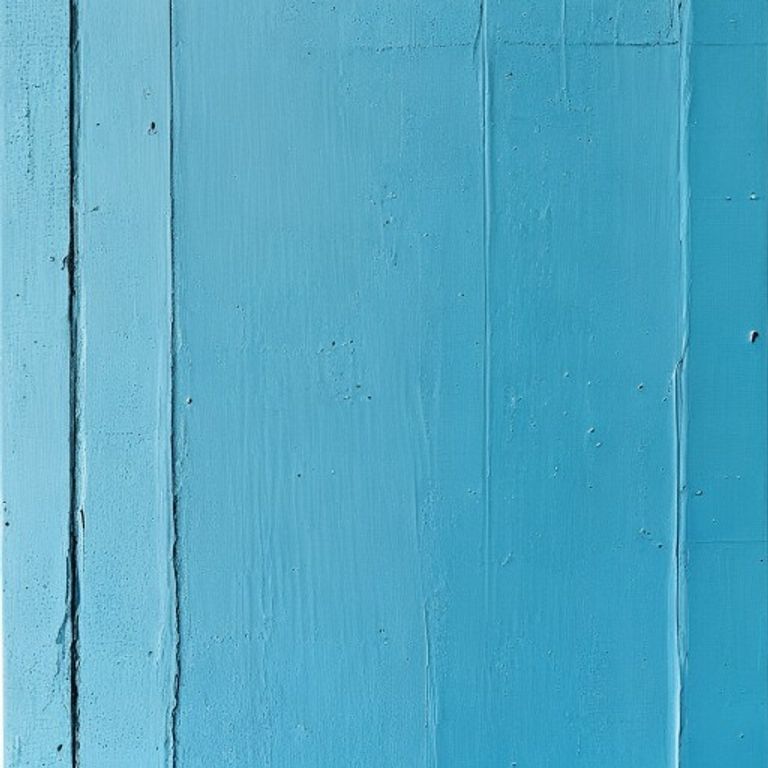
RAL 5015 is not a passive sky. It is a blue with a cold, sharp bite, carrying a cyan undertone that pushes it toward turquoise without ever losing its primary-blue authority. On a matte finish, it reads as a flat, almost metallic expanse—like a freshly painted steel beam catching a winter morning. On a gloss surface, it gains a glassy depth, reflecting light with a crisp, clinical clarity. The HEX value #2874B2 sits in a middle range of brightness: it is too saturated to be a pastel, yet too light to be a navy. This gives it a peculiar tension—it can feel both open and contained, airy yet solid. The color's dominant wavelength is around 480 nanometers, placing it squarely in the blue-cyan region of the visible spectrum, which explains why it appears to vibrate slightly when placed next to warm grays. Its undertone is distinctly cool, with no trace of violet or red; it is a blue that leans toward the green side of the wheel, making it feel more like a synthetic pigment than a natural sky. In low light, it darkens to a slate-like blue, but even then, the cyan remains stubbornly present.
Where you see RAL 5015
This color is a workhorse in industrial and public-sector applications. It is frequently specified for the exterior housings of heavy machinery—forklifts, compressors, and agricultural equipment—where a non-reflective, high-visibility blue is required for safety but a red or orange would be too aggressive. In transportation, it appears on regional train carriages and public bus livery across parts of Central and Northern Europe, particularly on vehicles serving airport or harbor routes where the blue signals a neutral, service-oriented identity. RAL 5015 is also common on metal roofing panels and ventilation ductwork in commercial buildings, chosen for its resistance to fading under UV exposure and its ability to blend with gray urban environments without disappearing. In signage, you will find it on wayfinding boards in hospitals and university campuses, where it is used for directional arrows and information panels because it offers high contrast with white text and does not trigger the same fatigue as a pure primary blue. One specific, verifiable use: it is the standard blue for many German fire brigade vehicles (though not all—some use RAL 5012), and it is listed in the official RAL color register for traffic control equipment.
Pairs well with
For a high-contrast, technical palette, pair RAL 5015 with RAL 9006 (White aluminum). The silvery, slightly warm gray of 9006 cuts the cyan chill of 5015, creating a combination that reads as engineered and precise—ideal for control panels or architectural trims. For a more grounded, earthy contrast, use RAL 7016 (Anthracite grey). The deep, almost black-gray of 7016 anchors 5015's brightness, producing a look common on high-end industrial furniture and facade cladding. If you want a complementary tension, introduce RAL 2004 (Pure orange). The two colors sit opposite each other on the color wheel, and the orange's warmth will make the blue appear even sharper and more electric—effective for hazard markings or accent details. For a muted, sophisticated pairing, try RAL 7044 (Silk grey). This light, slightly yellowish gray softens the clinical edge of 5015 without dulling it, suitable for interior wall combinations in modern offices or clinics.
Common confusion
The two most frequently mistaken colors for RAL 5015 are RAL 5012 (Light blue) and RAL 5024 (Pastel blue). RAL 5012 is noticeably paler and greener—it has a higher lightness value and a more pronounced cyan shift, making it look like a washed-out version of 5015. On a fan deck, place them side by side: 5012 will appear almost minty, while 5015 holds a denser, more saturated blue body. RAL 5024, despite its name, is actually duller and more grayed out than 5015. It contains a significant amount of white and a touch of black, which mutes its chroma. Under daylight, 5024 looks dusty and soft, whereas 5015 retains a hard, glossy presence. The key distinction is saturation: 5015 has a chroma value roughly 20% higher than 5024, which you can see clearly by comparing the two on a white background.
Picking RAL 5015 from a photo
Use RAL Picker on iOS or Android to sample a surface in a camera view or photo and compare the nearest RAL Classic colors, including RAL 5015. Camera white balance, lighting, shadows and reflections affect the result. Use even, neutral lighting and treat the match as an approximation. Before ordering paint or specifying a finish, confirm the color with a physical RAL swatch.