 RAL Picker
Character of RAL 8022
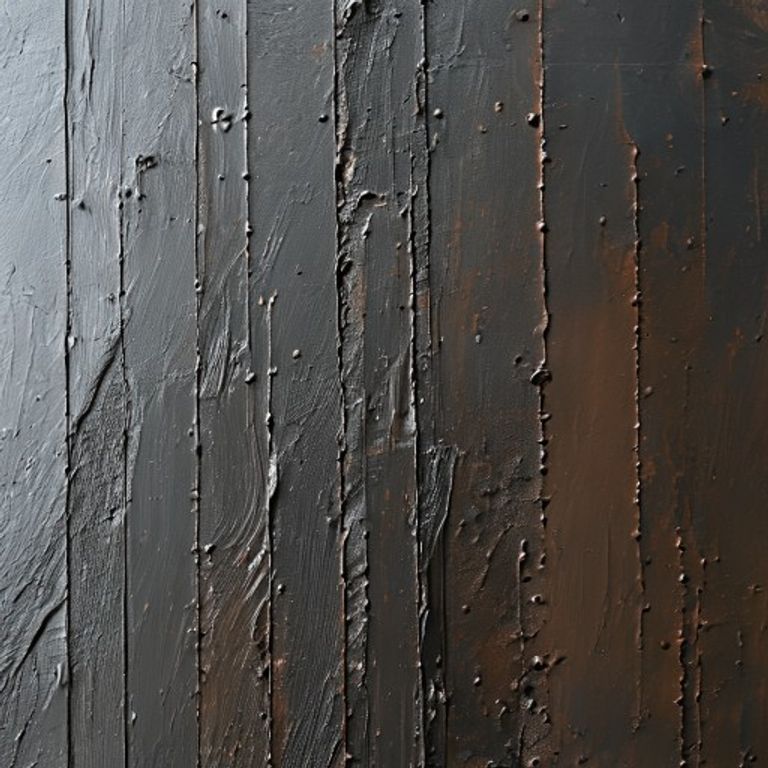
RAL 8022, Black brown, is not a brown that leans toward red or orange. It is a brown that has been pulled deep into the near-black zone, carrying a cool, almost graphite undertone. On a fan deck, it sits as a dense, matte void that still holds a whisper of earth — not the warmth of cocoa or the rust of terracotta, but the dry, mineral quality of basalt or deeply weathered iron. Under direct daylight, the brown becomes just perceptible, a subtle shift from pure black that prevents the surface from reading as dead or flat. In shadow, RAL 8022 merges with true black, losing its chromatic identity entirely. This color absorbs light aggressively but does not go glossy; its typical finish is matte or eggshell, which reinforces its tactile, grounded feel. The HEX value #212121 confirms this: it is only 17% lightness on the grayscale, with a red-green-blue balance that is nearly equal but weighted slightly toward red (RGB: 33, 33, 33). That tiny red bias is what separates it from a neutral dark gray like RAL 7021. It feels serious, industrial, and unapologetically heavy.
Where you see RAL 8022
You find RAL 8022 on the housings of large industrial machinery, especially on gearboxes, motor casings, and hydraulic pumps where a color that hides grease and grime is functional. It is standard on certain heavy-duty agricultural equipment — not the main body of a tractor, but the undercarriage guards, wheel hubs, and attachment mounts. In railway engineering, it appears on bogie frames and underfloor components of freight cars, where its near-black appearance reduces visual contrast against the track ballast. In architecture, RAL 8022 is used on extruded aluminum window frames and door thresholds in commercial buildings where the designer wants a dark frame that does not read as pure black, avoiding the harsh contrast of RAL 9005. It is also common on street furniture: bollards, traffic signal poles, and anti-ram barriers in urban plazas, chosen because it weathers to a consistent, dusty appearance rather than fading to a washed-out gray. In consumer products, you see it on high-end power tools and professional-grade camera tripod legs, where the color signals durability and tool-like precision.
Pairs well with
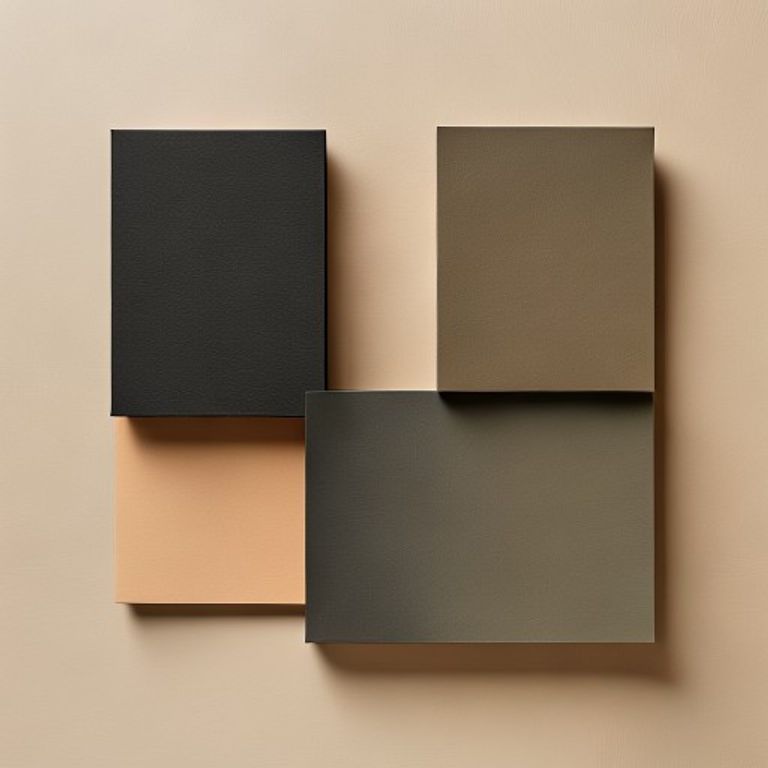
RAL 1019 (Grey beige) creates a restrained, earthy pairing. The warm, dusty beige lifts the brown in RAL 8022 without competing for attention, mimicking natural mineral strata. RAL 7001 (Silver grey) offers a crisp, cool contrast — the silver grey reads as almost white next to the black brown, giving a technical, engineering aesthetic common in control panels and laboratory equipment. RAL 3007 (Black red) is a close relative: a dark, dried-blood red that shares the same near-black density. Together they form a monochromatic but chromatic duo, used in luxury automotive interiors and high-end audio gear where subtle color variation matters. RAL 1036 (Pearl gold) provides the strongest contrast — a metallic gold with a greenish cast that, against the matte black brown, creates a look of restrained opulence, often seen on signage borders or accent trim in museum architecture.
Common confusion
The most frequent mix-up is with RAL 8028 (Terracotta brown). On a fan deck, RAL 8028 is noticeably lighter and warmer — it has a distinct red-orange undertone that becomes obvious when you hold the two chips side by side. In a photo, however, lighting can compress that difference. The test is to look at the chip under a 5000K daylight lamp: RAL 8022 will show almost no red, while RAL 8028 will glow with a rusty hue. Another close rival is RAL 7021 (Black grey). That color is a true neutral dark gray with zero brown content. The distinction is easiest to see against a white background: RAL 7021 looks like a dark cloud, while RAL 8022 looks like dried earth. If you see any hint of purple or chocolate, you are looking at RAL 8022, not the gray.
Picking RAL 8022 from a photo
Use RAL Picker on iOS or Android to sample a surface in a camera view or photo and compare the nearest RAL Classic colors, including RAL 8022. Camera white balance, lighting, shadows and reflections affect the result. Use even, neutral lighting and treat the match as an approximation. Before ordering paint or specifying a finish, confirm the color with a physical RAL swatch.