 RAL Picker
Character of RAL 1015
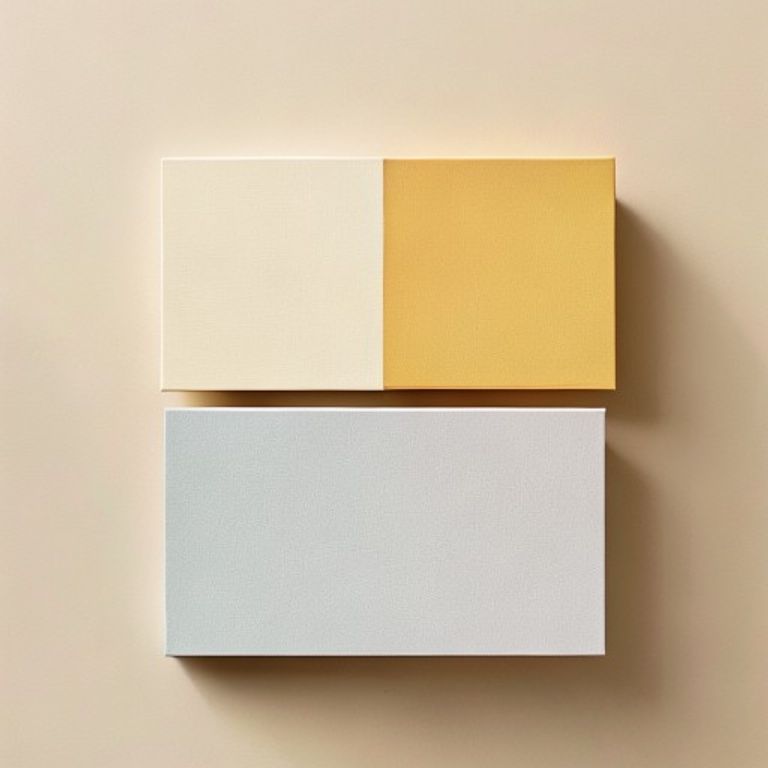
RAL 1015, Light ivory, is not a warm white. It is a deliberate, matte off-white with a distinct yellow-beige undertone that leans toward dried straw rather than fresh cream. On the LRV scale, it sits in the high 70s, reflecting substantial light without the clinical glare of a true white. The pigment load carries a faint, dusty quality—like limestone dust mixed with a whisper of ochre. In direct sunlight, the surface reads as a soft, sun-bleached bone; under cool fluorescent light, the yellow base can flatten into a muted, almost chalky beige. This color has no pink or green influence. Its undertone is exclusively warm, but it is not buttery or sweet—it remains restrained, almost stoic. The finish of a typical RAL 1015 coating is flat to semi-gloss, which reinforces its tactile, mineral-like presence. It is a color that absorbs rather than reflects personality, making it a background that never competes.
Where you see RAL 1015
RAL 1015 is a workhorse in industrial and architectural contexts where visibility must be balanced with subdued presence. You will find it on the exterior walls of mid-century public housing blocks across Northern Europe, where it was specified for its ability to hide weathering and dust while maintaining a clean, neutral facade. In transportation, it is common on the body panels of railway carriages and bus interiors—particularly on ceiling panels and seat frames—because it reduces glare for passengers without feeling sterile. The color appears on heavy machinery housings for agricultural equipment, especially on engine covers and fuel tanks, where its light reflectance helps keep surfaces cooler under direct sun. In signage, RAL 1015 is frequently the base color for information panels on municipal buildings and hospital corridors, often paired with dark brown or black text for high legibility. It is also a standard choice for plaster and stucco finishes in Mediterranean coastal architecture, where the warm ivory resists fading under intense UV exposure and blends with natural stone surroundings.
Pairs well with
For a restrained, natural palette, pair RAL 1015 with RAL 7021 (Black grey). The deep, almost charcoal grey provides a sharp, architectural contrast that grounds the ivory without the harshness of pure black. For a warmer, earthier combination, use RAL 8003 (Clay brown). This rich, terracotta-leaning brown echoes the ochre notes in RAL 1015, creating a cohesive look that works on facades and trims. For a softer, monochromatic scheme, choose RAL 7032 (Pebble grey). This warm, slightly greenish grey sits adjacent to the ivory on the color wheel, producing a subtle, layered effect ideal for interior walls and furniture. Finally, RAL 3012 (Beige red) offers a muted, brick-like accent. The red is desaturated enough to avoid clashing, but it introduces a living warmth that the ivory alone lacks—effective for doors or window frames in a light facade.
Common confusion
The most frequent mix-up is between RAL 1015 and RAL 1013 (Oyster white). RAL 1013 has a slightly stronger grey-beige undertone, making it appear cooler and more neutral on a fan deck. Hold them side by side: RAL 1015 will look yellower and more opaque, while RAL 1013 seems dustier and slightly translucent. Another close neighbor is RAL 1014 (Ivory). RAL 1014 is noticeably darker and more saturated with yellow—it reads as a stronger, almost honeyed cream. On a photo or fan deck, compare the lower edge of the color chip: RAL 1015 will recede, while RAL 1014 will push forward with its higher chroma. If you see a pinkish or salmon cast, you are looking at neither—that is likely RAL 1001 (Beige), which is a separate color entirely.
Picking RAL 1015 from a photo
Use RAL Picker on iOS or Android to sample a surface in a camera view or photo and compare the nearest RAL Classic colors, including RAL 1015. Camera white balance, lighting, shadows and reflections affect the result. Use even, neutral lighting and treat the match as an approximation. Before ordering paint or specifying a finish, confirm the color with a physical RAL swatch.